Calendula
A delightful, hardy flower with a plethora of medicinal uses, enjoyed for its bright and sunny flavour.

Here I present Calendula harvested from my medicinal garden. No medicinal garden is complete without Calendula, which, fortunately, is extraordinarily easy to grow in a variety of climates.
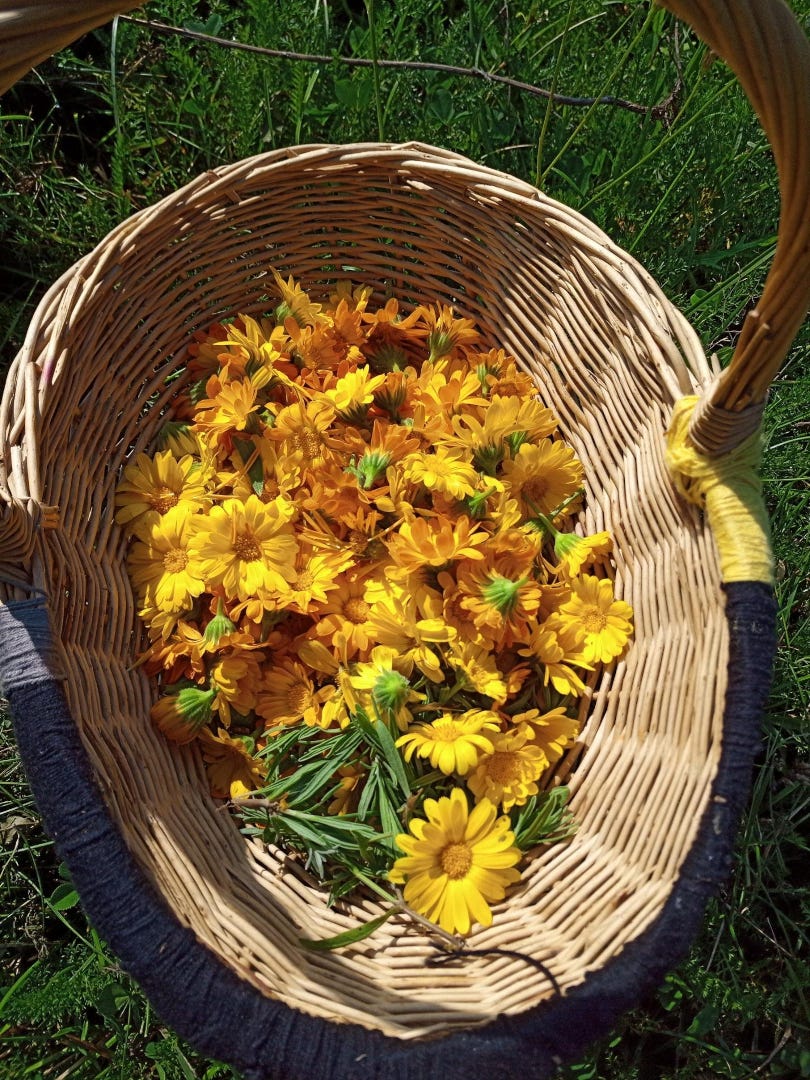
Calendula officinalis has been used as an important medicinal plant since at least the 12th century. Its active phytochemicals include flavonoids, triterpene saponins, and carotenoids - with antifungal, antimicrobial, and anti-inflammatory effects.

Steeping Calendula in hot water is a common medicinal preparation of this flower, and just one way to extract its therapeutic phytochemicals. In traditional medicine from the Moroccan Rif, Calendula is prepared as a hot water infusion (aka “tea”) and used to treat metabolic diseases including Type 2 Diabetes, meriting further pharmaceutical and phytochemical studies: https://www.ncbi.nlm.nih.gov/pmc/articles/PMC6838988/
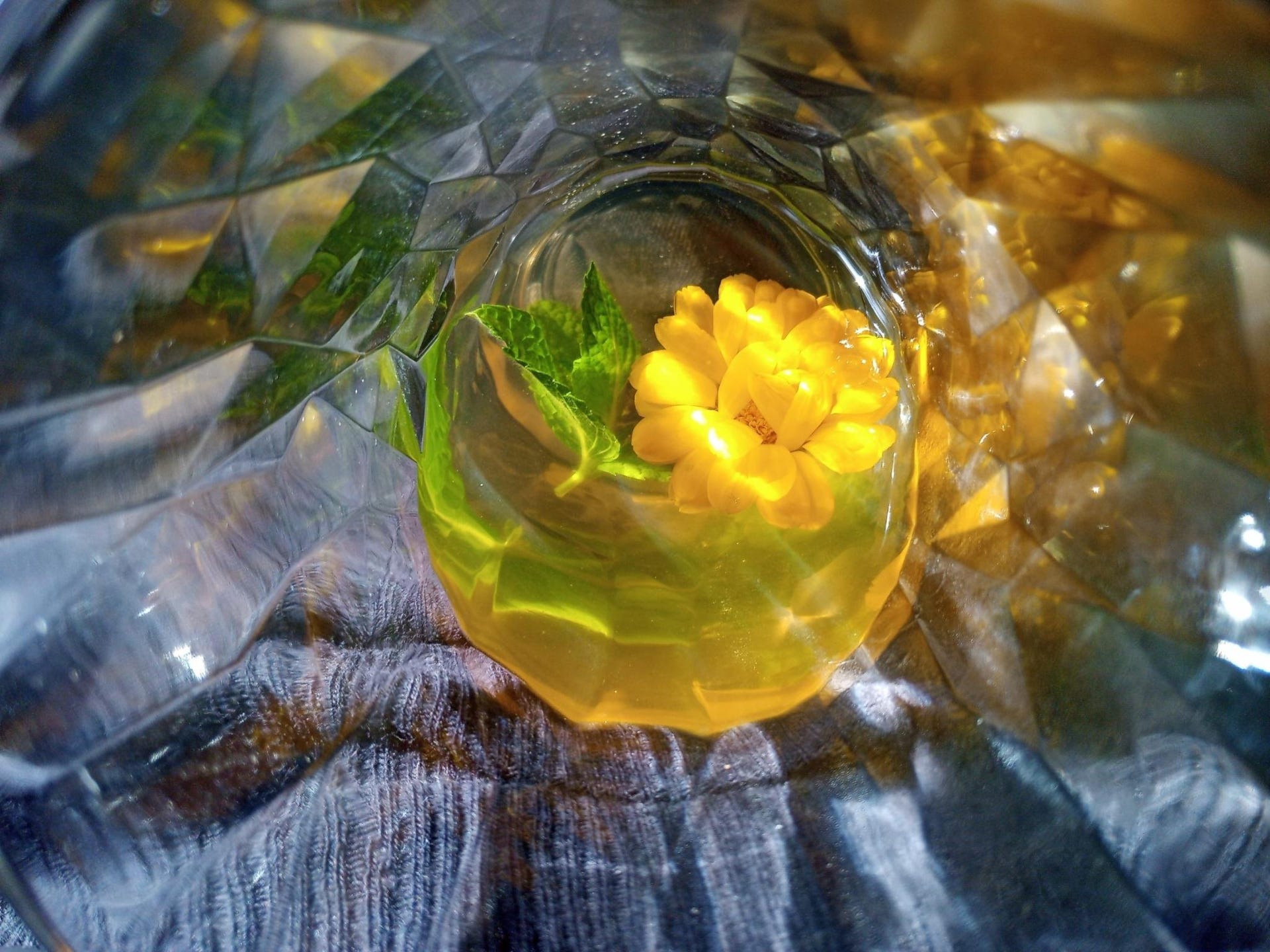
In addition to being a delicious medicinal tea (often simply enjoyed for its delicate floral flavours), Calendula has tremendous potential as an anthelmintic – a compound that kills infectious worms. This study found saponins of Calendula destroy the cuticle of H. polygyrus bakeri larvae, a species of worm used as a laboratory model to study gastrointestinal nematodes, and inhibit infectivity: https://www.ncbi.nlm.nih.gov/pmc/articles/PMC7999767/#B1-pathogens-10-00296
Saponins are molecules with detergent properties – each molecule has a polar head and a long non-polar tail – which can interact with parasite lipids and disrupt the integrity of their cells. Saponins have a direct cytotoxic effect by increasing cell membrane permeability, and can disrupt normal parasite function by denaturing their metabolic and structural proteins. This makes saponins particularly useful for attacking the cuticle, the parasite’s outermost coating, which is rich in lipids and decorated with glycoproteins that regulate recognition by the host’s innate immune system. Saponins can reduce virulence in nematodes by altering this immunogenic surface and impairing the worm’s ability to invade their host. Calendula’s saponins are “nature’s soap,” some might say, and can offer great potential as therapeutic agents in the world of parasitology.
Interesting to note here is the above paper’s (incorrect) use of the word “marigold” to describe Calendula - a misnomer that continues to persist. Perhaps this conflation is due to the similar appearance between these flowers, or perhaps it is an issue of translation. Either way, this is a great example of why we use scientific names when discussing specific organisms!
References:
Chaachouay, N., Benkhnigue, O., Fadli, M., El Ibaoui, H., & Zidane, L. (2019). Ethnobotanical and ethnopharmacological studies of medicinal and aromatic plants used in the treatment of metabolic diseases in the Moroccan Rif. Heliyon, 5(10), e02191. https://doi.org/10.1016/j.heliyon.2019.e02191
Doligalska, M., Jóźwicka, K., Szewczak, L., Nowakowska, J., Brodaczewska, K., Goździk, K., Pączkowski, C., & Szakiel, A. (2021). Calendula officinalis Triterpenoid Saponins Impact the Immune Recognition of Proteins in Parasitic Nematodes. Pathogens (Basel, Switzerland), 10(3), 296. https://doi.org/10.3390/pathogens10030296
Shahane, K., Kshirsagar, M., Tambe, S., Jain, D., Rout, S., Ferreira, M. K. M., Mali, S., Amin, P., Srivastav, P. P., Cruz, J., & Lima, R. R. (2023). An Updated Review on the Multifaceted Therapeutic Potential of Calendula officinalis L. Pharmaceuticals (Basel, Switzerland), 16(4), 611. https://doi.org/10.3390/ph16040611